
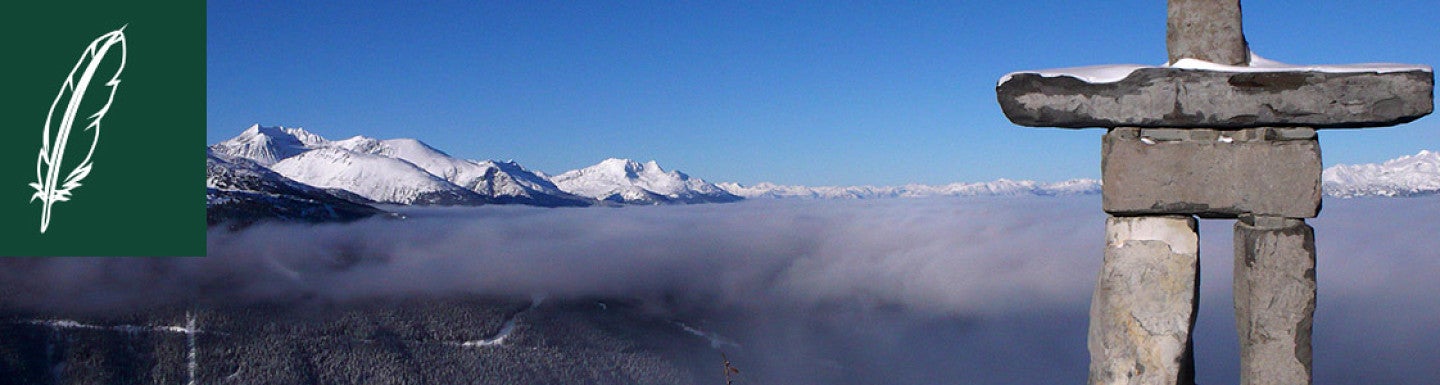
Fellows with the Native Environmental Sovereignty Project examine emerging Tribal roles in comanaging lands and resources.
Indigenous Creation Law Initiative
The Native Environmental Sovereignty Project in 2025 launched the Indigenous Creation Law Initiative (ICLI). Envisioned by NESP Senior Fellow and former Director of the National Park Service Charles F. "Chuck" Sams III, and co-led by Philip H. Knight Professor of Law Mary Christina Wood, the ICLI is an evolving research and outreach endeavor aimed at leveraging the "original laws" embedded in Tribal creation stories to advance a legal framework that upholds Tribal sovereignty and supports Tribal self-determination over lands and resources located both within and beyond reservations.
Access NESP's Prospectus for the Indigenous Creation Law Initiative.
19th Annual Rennard Strickland Lecture
- 18th Annual Rennard Strickland Lecture, "Fulfilling a Covenant: Stewardship of America's Best Idea," Charles F. "Chuck" Sams III (2024).
- 17th Annual Rennard Strickland Lecture, "Shared Stewardship," Elizabeth Kronk Warner (2023).
- 16th Annual Rennard Strickland Lecture, "The Dark Matter of Indian Law: The Duty of Protection to Indian Tribes," Matthew L.M. Fletcher (2022).
- 15th Annual Rennard Strickland Lecture, "Oil and Gas: An Oklahoma Origin Story," Stacy Leeds (2021).
- 14th Annual Rennard Strickland Lecture, "A Day of Reckoning: Seizing the Sacred Moment to Restore Balance," President Fawn Sharp (2020).
- 13th Annual Rennard Strickland Lecture, "Environmental Justice and Tribal Sovereignty," Mary Kathryn Nagle (2019).
Indigenous Peoples Reception
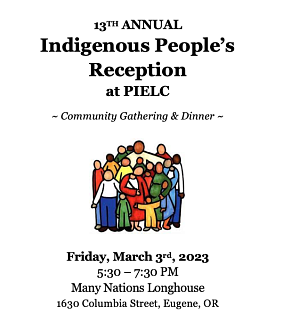
Visit the following link to read the opening remarks as delivered by 2022-23 Native Environmental Sovereignty Project Fellow Chloe Tesch at the 13th Annual Indigenous People's Reception:
File 2023-ipr-land-acknowledgment-.pdfThese remarks were prepared in collaboration with ENR Program Assistant Madi Prue and with guidance from the Native American Law Student Association and the Many Nations Longhouse. Folks who choose to use these remarks as a land acknowledgment reference should note that, rather than being rigidly formulaic, land acknowledgments require individual work and must evolve according to their unique context.
Recent Presentations
- Howard Arnett and Chuck Sams III, "Treaties, Trust, and Tomorrow: Navigating the Legal Landscape of Native Lands," Oregon Law Perspective Series, University of Oregon School of Law (August 8, 2025).
- Howard Arnett, "Defending Sacred Sites: Apache Stronghold v. United States and the Battle for Oak Flat," Oregon Law Perspectives Series, University of Oregon School of Law (August 16, 2024)
- Howard Arnett, "Retrospective: Indian Law and the 2022-23 SCOTUS," Oregon Law Perspectives Series, University of Oregon School of Law (August 10, 2023).
- Howard Arnett and Elizabeth Hidalgo Reese, "Oklahoma v. Castro-Huerta: What the Case Means for Tribal Sovereignty," moderated by Jennifer Reynolds, O'Connell Conference, University of Oregon School of Law (September 30, 2022).
- Howard Arnett and Garrett Epps, "Brackeen v. Haaland: The Supreme Court Takes on the Indian Child Welfare Act," moderated by Jennifer Reynolds, Oregon Law Perspectives Series, University of Oregon School of Law (September 29, 2022).
- Howard Arnett, "McGirt v. Oklahoma: What Does it Mean and What Might Happen Next," moderated by Jennifer Reynolds, Oregon Law Perspectives Series, University of Oregon School of Law (September 2020).
Select Publications
- Maggie Massey (3L Fellow), Alaska Native Allotments and Federal Reserved Water Rights, Environmental and Natural Resources Law Center (June 2019).
- Mary Wood, Charles Woodward, Whitman Koch, and Ambriel Sandone, Tribal Guide to the Legal Landscape of Fossil Fuel Infrastructure Projects, Environmental and Natural Resources Law Center (June 2019).
- Mary Wood, Anna Elza Brady, and Brendan Keenan, Jr., Tribal Tools & Legal Levers for Halting Fossil Fuel Transport & Exports Through the Pacific Northwest, American Indian Law Journal: Vol. 7, Iss. 1, Article 5 (2018).
Faculty
NESP Fellows 2026-2027
Maya Haubrich (2L)
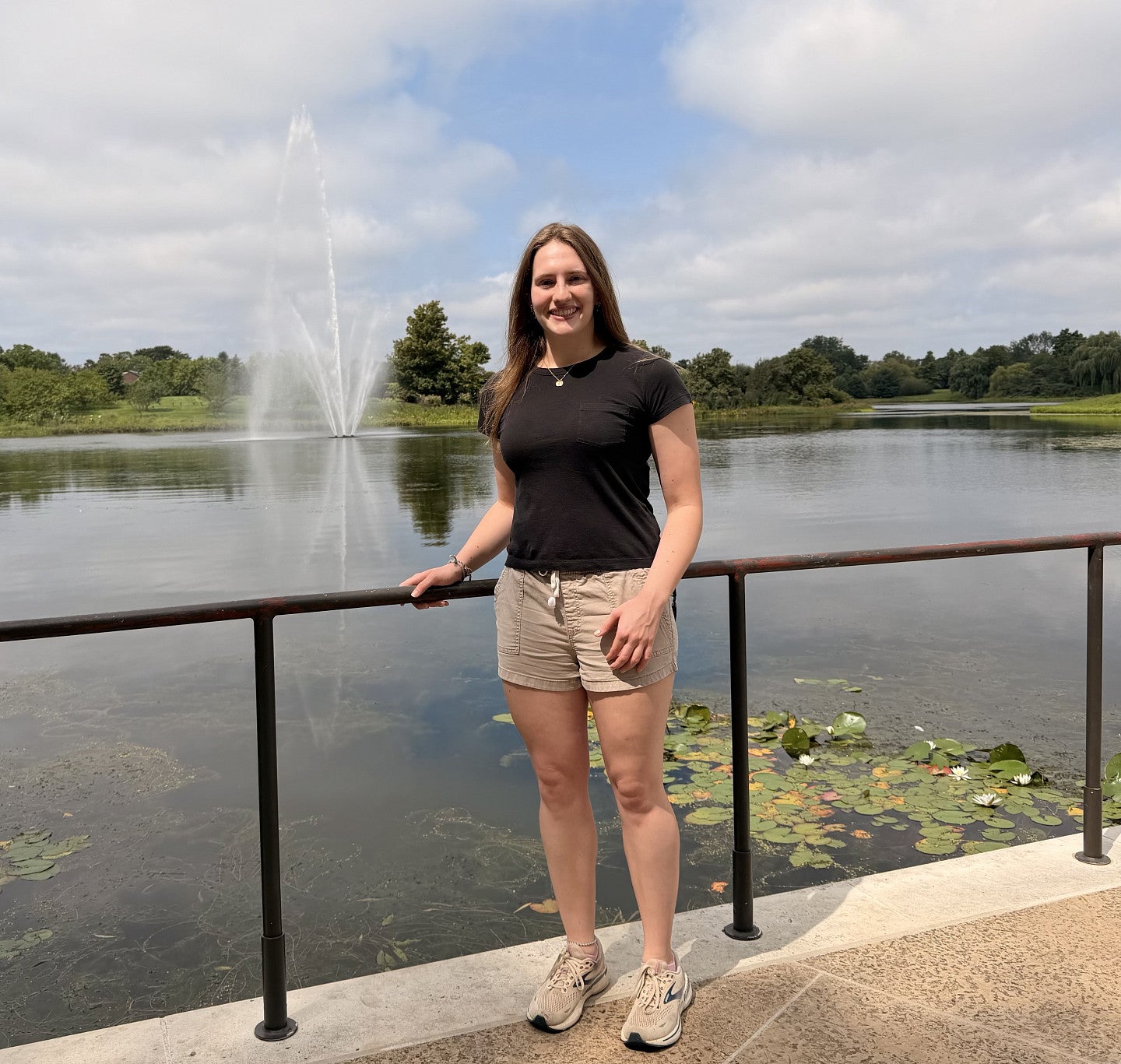
Maya is from Grayslake, Illinois. Her home county is host to the Lake County Forest Preserves, which steward over 30,000 acres of wild prairies and forests. Maya's love for the environment and passion for conservation blossomed hiking the Preserves' trails and exploring the Chicago Botanic Garden with her gradnmother, Sarah. As an undergraduate student, Maya attended Brandeis University and majored in environmental studies with minors in climate justice, science, and policy; legal studies; and French and Francophone Studies. Her undergraduate work focused on the rights of nature movement and Indigenous rights and activism on Mauna a Wākea on the Big Island of Hawai'i. A highlight of her time at Brandeis was serving as a student representative at the 28th Conference of the Parties (COP28) in Dubai.
During her time at Oregon Law, Maya has been involved with the Native American Law Students Association (NALSA) and the Green Business Initiative (GBI). During her 1L summer, she served as a Wayne Morse/ENR Center Legal Fellow with the Confederated Tribes of Siletz Indians. Now a 2L, Maya is serving on the boards of NALSA and GBI as she continues focusing her studies on environmental and Indian law.
Max McCool (3L)
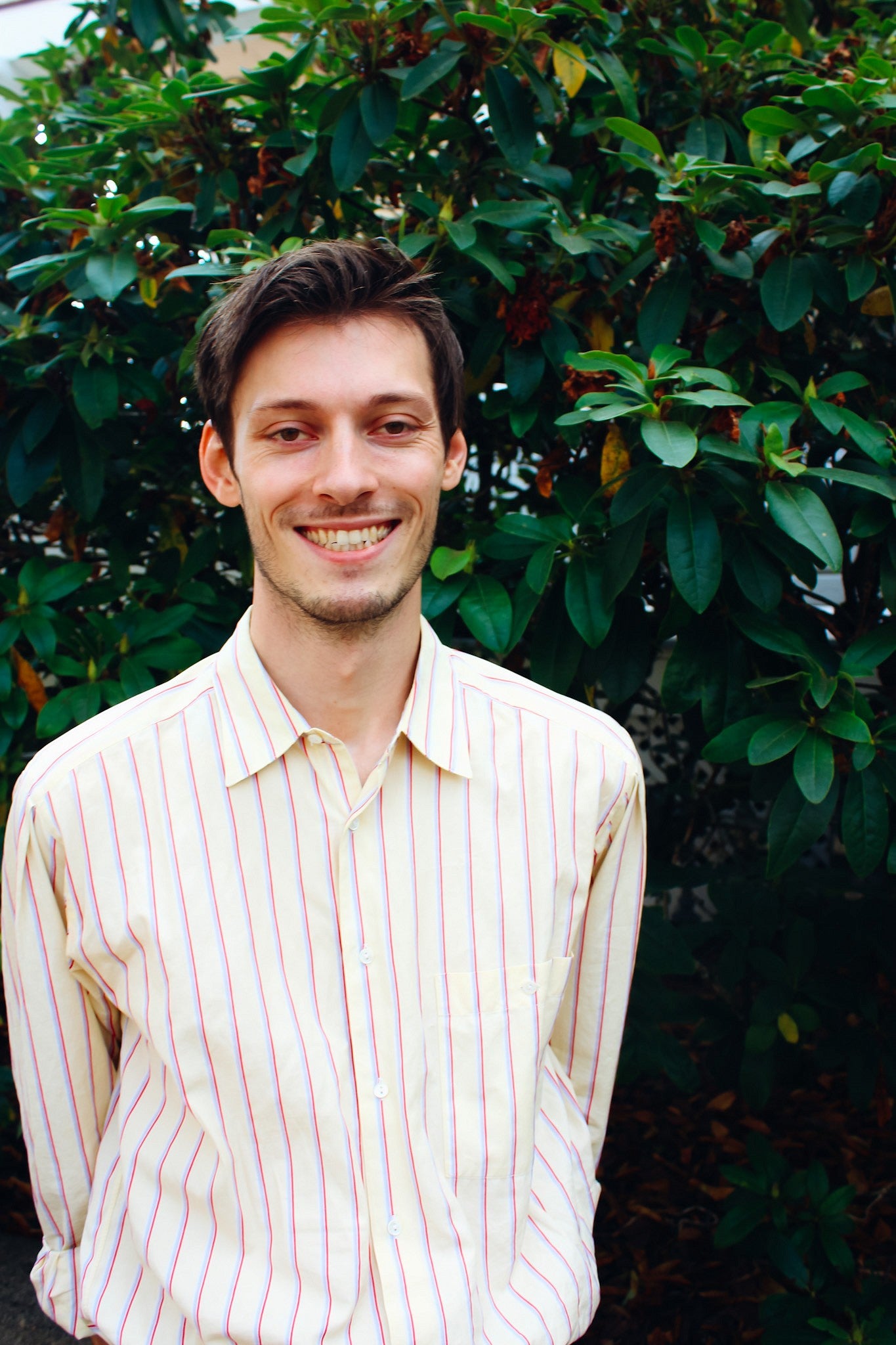
Max is a lifelong Oregonian who grew up fly fishing the diversity of rivers the area has to offer. He holds a B.S. in environmental management from Cal Poly, San Luis Obispo, where he also completed graduate research regarding the sustainability of fertilization practices in California citrus orchards. Prior to attending law school, Max worked in ESG as an analyst and founded a nonprofit focused on supporting Oregon's Native Trout populations. His primary academic interests relate to water law and the future sustainability of fisheries and agriculture throughout the western United States.
As a 1L and 2L, Max served as an ENR Research Fellow with the Oceans, Coasts, and Watersheds Project, where he focused on freshwater issues. During his 1L summer, he worked for The Freshwater Trust. Following his 2L year, he summered at Monterey Waterkeeper.
Megan Shubert (2L)
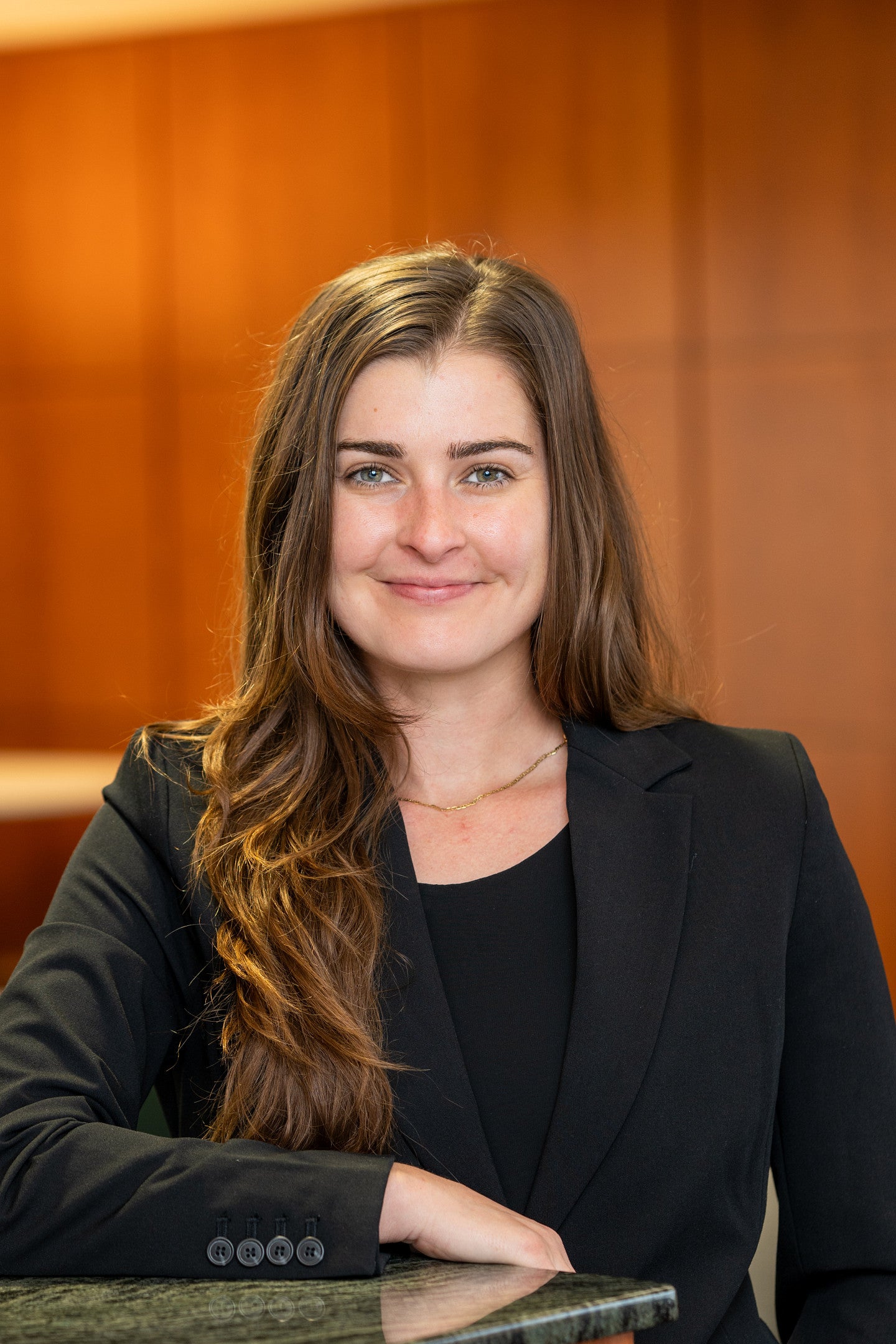
Megan grew up in California and developed a strong interest in history, education, and public service through her academic and professional experience. She earned a B.A. in history from Cal Poly Humboldt and an M.A. in history from Western Washington University, where she graduated with honors and served as a Graduate Teaching Assistant. Her studies focused on public institutions, policy, and social change, sparking a lasting interest in the ways that law shapes communities and their access to opportunities.
Before law school, Megan worked in education and public service across Washington and California. As a legal assistant with the Washington State Attorney General's Office, she supported matters such as child welfare and juvenile dependency proceedings; communicated with Tribal representatives and counsel; and participated in initiatives focused on safety, equity, and community engagement.
At Oregon Law, Megan has served as a Law School Ambassador and volunteered at the Public Interest Environmental Law Conference. Following her first year, Megan externed with the Coalition of Oregon Land Trusts, where she conducted legal research on conservation easements, drinking water source protection, and Indigenous land access issues. She is excited to continue exploring the intersections of public interest advocacy, environmental law, and Tribal sovereignty as she advances through law school.