
The Food Sovereignty Project (formerly the Food Resiliency Project) is dedicated to working with Indigenous peoples and community-based organizations to pursue more equitable and just food systems.
Recent Publications
- Michael Fakhri, Michellle Smith, & ENR Fellows Blakely Durham, Kelly Keith, James Meschia, and Nicole Morshead, Policy Analysis: OR HB 3372—What Does Oregon's New Water Use Exemption Mean for Community-Scale Producers?, Environmental and Natural Resources Law Center (Spring 2026)
- Michael Fakhri, Land and the Right to Food, UN General Assembly (A/HRC/61/51) (2026)
- Michael Fakhri, The Right to Food: Finance and National Action Plans, UN General Assembly (A/HRC/58/48) (2025).
- Michael Fakhri, The Right to Food, Violence, and Food Systems, T.M.C. Asser Press (2024)
- Michael Fakhri, Fisheries and the right to food in the context of climate change, UN General Assembly (A/HRC/55/49) (January 9, 2024)
- Michael Fakhri, Conflict and the Right to Food, UN General Assembly (A/HRC/52/40) (December 29, 2022)
- Michael Fakhri, The right to food and the coronavirus disease pandemic," UN General Assembly (A/76/237) (July 18, 2022).
- Michael Fakhri, Markets, Sovereignty, and Racialization, 25 Journal of International Economic Law 1 (2022).
- Michael Fakhri, Human Rights Principles for Trade, 116 American Journal of International Law Unbound 119 (2022).
- Michael Fakhri, Seeds, Right to Life, and Farmers' Rights, UN Human Rights Council (A/HRC/49/23) (December 30, 2021).
- Michael Fakhri, The Right to Food, UN General Assembly (A/76/237) (July 27, 2021).
- Michael Fakhri, A Trade Agenda for the Right to Food, 64 Development 212 (2021).
- Michael Fakhri, A History of Food Security and Agriculture in International Trade Law, 1945-2015, in Akbar Rasulov and John Haskell (eds.) International Economic Law: New Voices, New Perspectives 55, Springer (2020).
- Michael Fakhri, co-authored with Madeleine Redfern, Inuit Seal Hunting and the Construction of Indigenous Identity in Trade Law, in John Borrows and Risa Schwartz (eds.), INDIGENOUS PEOPLES AND INTERNATIONAL TRADE: BUILDING AN EQUITABLE AND INCLUSIVE INTERNATIONAL TRADE AND INVESTMENT AGREEMENT, Cambridge University Press (2020).
- Michael Fakhri, A History of Food Security and Agriculture in International Trade Law, 1945–2017, in J. D. Haskell and A. Rasulov (eds.), New Voices and New Perspectives in International Economic Law, European Yearbook of International Economic Law 55 (Spring 2020).
- Deb Mailander and Zoe Grant, When Honey Bees Hit the Road: The Role of Federal, State, and Local Laws in Regulating Honey Bee Transportation (May 2019).
- Michael Fakhri, Sugar, in Jessie Hohmann and Daniel Joyce (eds.), International Law’s Objects 478, Oxford University Press (2019).
- Michael Fakhri, Third World Sovereignty, Indigenous Sovereignty, and Food Sovereignty: living with sovereignty despite the map, 9 Transnational Legal Theory 218 (2018).
In the News
- Michael Fakhri (featured), "UN hunger expert: US must recognize 'right to food' to fix broken system," The Guardian (November 9, 2023).
- Michael Fakhri (interviewed), "The Sovereignty of Sharing: An Interview with Michael Fakhri (Part II)," OpinioJuris (July 6, 2023).
- Michael Fakhri (interviewed), "The Sovereignty of Sharing: An Interview with Michael Fakhri (Part I)," OpinioJuris (July 6, 2023).
- Michael Fakhri, "Hunger and famine are not accidents - they are created by the actions of people," Nature Journal (July 4, 2023).
- Michael Fakhri, Elisabetta Recine, and Sofia Monsalve, "A Human-Rights Approach to the Global Food Crisis," Project Syndicate (June 23, 2023).
- Michael Fakhri (featured), "Fighting Hunger from the Willamette Valley," Oregon Quarterly (Summer 2023).
- Michael Fakhri (interviewed), CFS Conversations Episode 10, Committee on World Food Security (December 13, 2022).
- Michael Fakhri (featured), "White House hunger summit failed to expand 'right to food,' UN expert says," The Guardian (October 4, 2022).
- Michael Fakhri, "Framing the Problem of Hunger and Conflict at the UN Security Council," Just Security (September 22, 2022).
- Michael Fakhri and Sofia Monsalve, "Ukraine helps feed the world - but its farmers, seeds, and future are in danger," The Guardian (June 13, 2022).
- Michael Fakhri (featured), "UN human rights expert welcomes Indian govt's decision to repeal farm laws," Business Standard (November 29, 2021).
- Michael Fakhri (guest), "The Great Food Reset," The Food Programme, BBC Podcast (July 25, 2021).
- Michael Fakhri, "The US Food System Creates Hunger and Debt - but There is Another Way," The Guardian (April 14, 2021).
- Michael Fakhri (quoted), "UN food systems summit quashes big business claims," Geneva Solutions (March 12, 2021).
- Michael Fakhri (quoted), "Farmers and rights groups boycott food summit over big business links," The Guardian (March 4, 2021).
- Michael Fakhri (featured), "COVID-19 Has Not Just Caused a Health Crisis but also a Hunger Crisis," AgriLand (February 9, 2021).
- Michael Fakhri (featured), "Can the United Nations protect human rights in the age of COVID-19?," Thomson Reuters Foundation News (October 23, 2020).
- Michael Fakhri, "Opinion: The future of food must include a commitment to human rights," Devex (October 16, 2020).
- Michael Fakhri (featured), "International community must support Lebanon and international agencies to avert hunger crisis, says UN human rights expert," Reliefweb (August 28, 2020).
- Michael Fakhri and Ntina Tzouvala, "To reduce world hunger, think beyond making food cheap," The Conversation (July 17, 2020).
- Michael Fakhri (featured), "People must regain control over food supply chain after coronavirus, says new U.N. envoy," Reuters (May 28, 2020).
- Michael Fakhri (featured), "UO law professor Michael Fakhri appointed to UN post," Around the O (March 30, 2020).
Faculty
FSP Fellows 2026-2027
Hugo Hollander (1L)

Born and raised in Orlando, Florida, to French immigrant parents, Hugo grew up surrounded by local orange groves and wetlands while spending summers in France. This dual identity sharpened his perspective as he studied environmental science at the University of Central Florida, where he contrasted France's aggressive sustainability policies with local environmental challenges. Motivated to make an impact, Hugo began volunteering with a local nonprofit—mapping transportation networks, advocating in city government, and mobilizing community turnout in elections. This work led to an internship where Hugo eventually became a founder for the Orlando Food Network Initiative, expanding community gardens on vacant public land, removing zoning barriers, and providing residents with free gardening supplies. Hugo is eager to work to support communities, build local food sovereignty, and advance sustainable food systems.
Kelly Keith (3L)
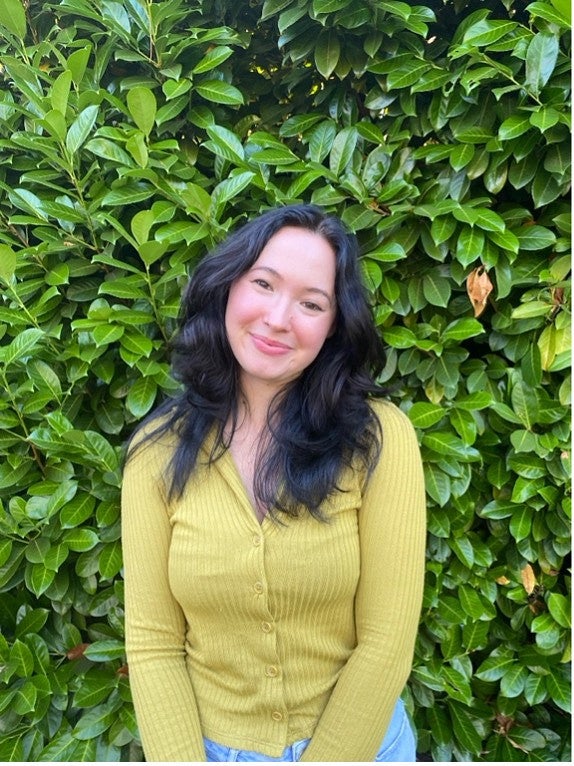
Kelly grew up in Northern California, where her first introduction to the legal system was in eighth grade when she read Twelve Angry Men. From that moment, Kelly set her sights on pursuing a legal career.
Kelly earned an English Literature degree with minors in Legal Studies and Philosophy from the University of Oregon, focusing her studies on rhetorical analysis and effective argumentation.
After graduating, Kelly worked for two years as a civil litigation legal assistant in Portland. Inspired by the Pacific Northwest’s natural landscape, Kelly returned to the University of Oregon for law school, where she remains motivated to contribute to research that advances environmental justice, sustainable stewardship, and equitable community representation.
As a 1L summer law clerk, Kelly returned to the civil litigation firm where she previously worked. For her 2L summer, Kelly worked at an employment law firm in Sacramento, where she supported employers through prelitigation and litigation matters.
Now entering her eighth year of living in Oregon, Kelly enjoys exploring the region’s natural beauty, with her favorite spot being Thor’s Well on the Oregon Coast.
Hannah Pittman (2L)
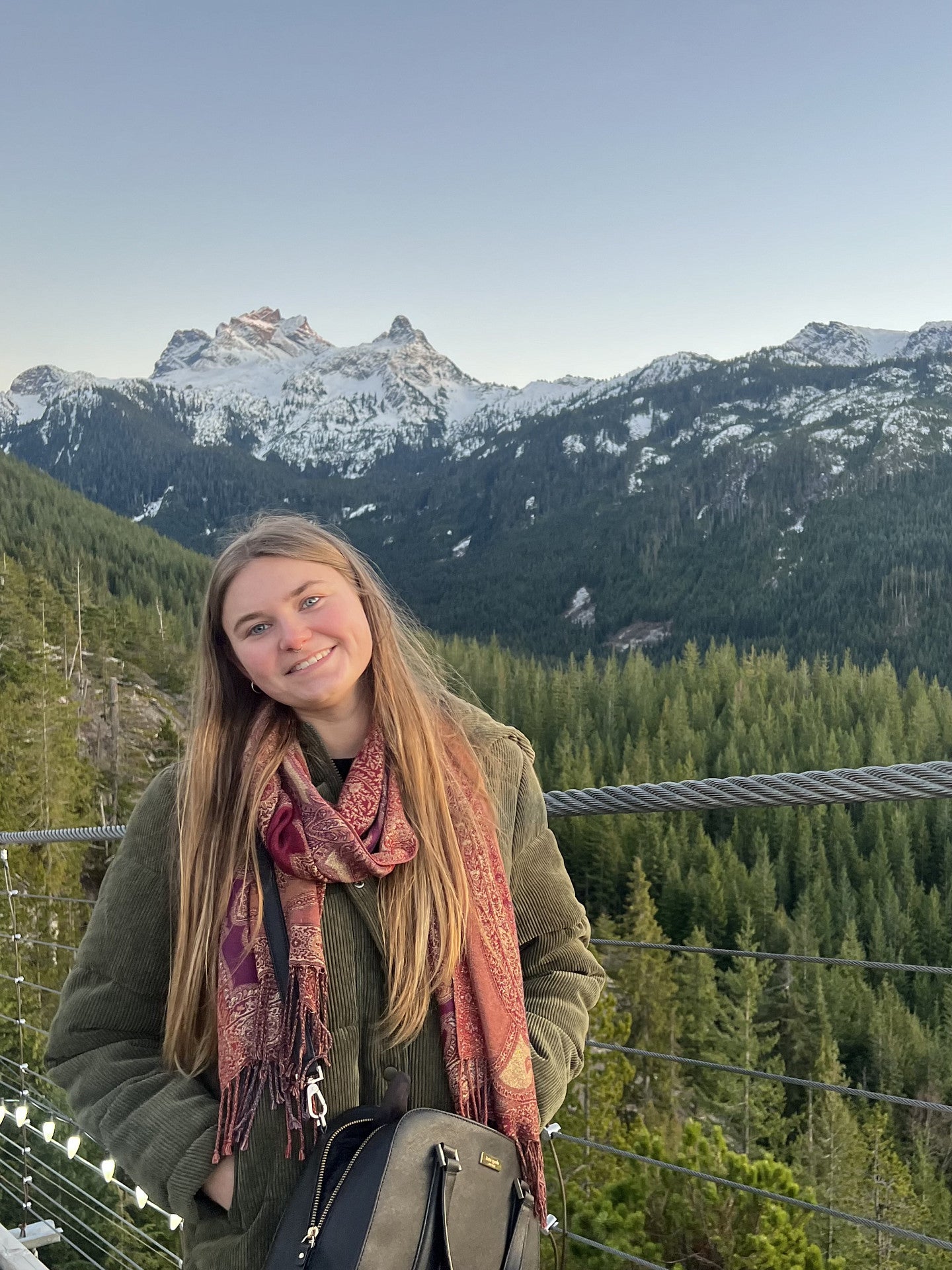
Hannah grew up in Michigan near the shores of the Great Lakes. Summers spent on Lakes Michigan and Huron sparked her love of the outdoors and connection to water. She earned a B.A. in political science, with a concentration in environmental studies, from Kalamazoo College. After graduating, she moved to Bellingham, Washington, where she served an AmeriCorps term at a local environmental nonprofit, leading community science efforts on the Salish Sea.
At Oregon Law, Hannah has continued to pursue her goals in public interest environmental law. As a 1L, she served as a Land Air Water representative, and she now serves as Conference Co-Director for the 2027 Public Interest Environmental Law Conference. During her 1L summer, Hannah interned at Great Lakes Environmental Law Center in Detroit, Michigan (GLELC). While at GLELC, she supported litigation and public comments on Detroit environmental issues, with a focus on environmental racism and justice. This work affirmed her interest in food sovereignty, and she hopes to continue exploring how environmental justice can support communities' rights to grow, access, and control their own food systems.
In her free time, Hannah enjoys mountain biking, photography, reading, and exploring the outdoors.
Paige Schlegel (2L)

Paige grew up in Breckenridge, Colorado, where she developed a deep appreciation for the Rocky Mountains and the complexity of the surrounding landscapes. She explored this interest further at Montana State University, studying Environmental Biology, Microbiology, and Soil Science. While there, she conducted extensive research on the microbial ecology of Yellowstone National Park hot springs. She started her professional career as an environmental microbiologist consulting on remediation of mine-affected waters, then shifted to a position supporting food sustainability and community access to local produce.
During her first year at Oregon Law, Paige served on the board of Land Air Water as the apprentice editor of the Western Environmental Law Update (WELU). Now a 2L, she continues as the WELU Director. During her 1L summer, Paige clerked in the 18th District Court of Colorado. There, she worked directly with civil court judges to draft orders, research legal issues, and develop a deeper understanding of the civil court system as a tool to address environmental issues. After graduation, Paige hopes to use her law degree to help bridge the gap between environmental science and policy.
Edward Stoddard (3L)
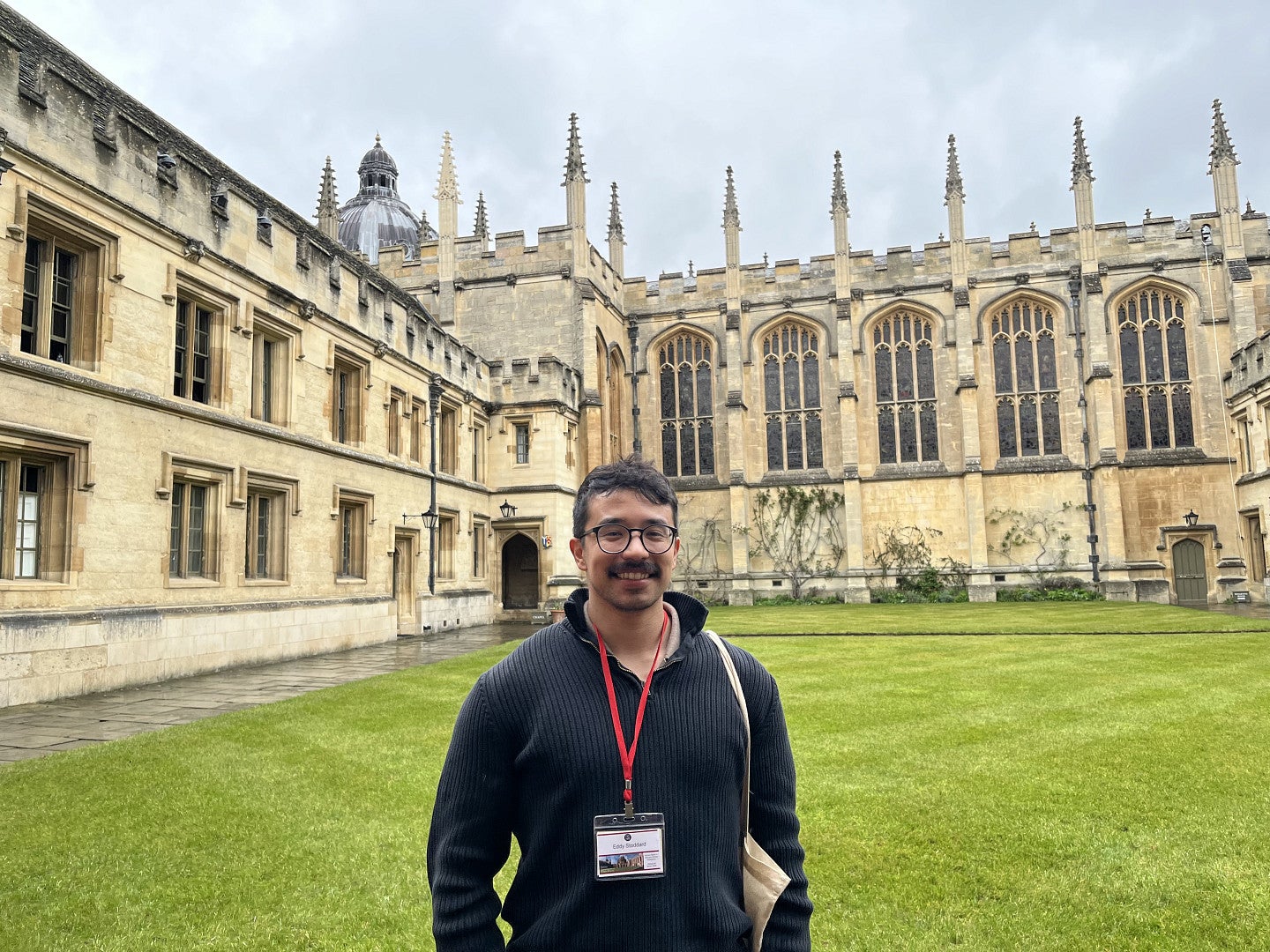
Edward spent most of his life in the desert before finding his new home in Oregon. Making his rounds through Texas, Nevada, and Arizona, Edward finally made the leap to Oregon with the mission of getting the best education in environmental law.
Edward's passion for environmental law proceeds his professional pursuits in the field. Having fought wildland fire (back when he had a chainsaw in his hands and cartilage in his knees), he has a longstanding commitment to protecting the outdoors and its wild inhabitants. He completed his graduate studies in Sustainability Solutions at Arizona State University, where he worked with engineers, legal experts, and community leaders to install Phoenix's first plastics recycling plant that could mold virtually anything—from plastic lumber to skateboards—from communal plastic waste.
Since starting at Oregon Law, Edward has made meaningful connections with environmental advocates in local non-profit organizations like Our Children's Trust, Cascadia Wildlands, and the Western Environmental Law Center. At the end of his 2L year, he was invited to the Oxford Consortium for Human Rights at Oxford University to explore legal responses to war and climate crises. Now a 3L, Edward continues pursuing his passion for environmental law as an editor for the Journal of Environmental Law and Litigation. In his free time, Edward enjoys orienteering, sparring, and painting.