
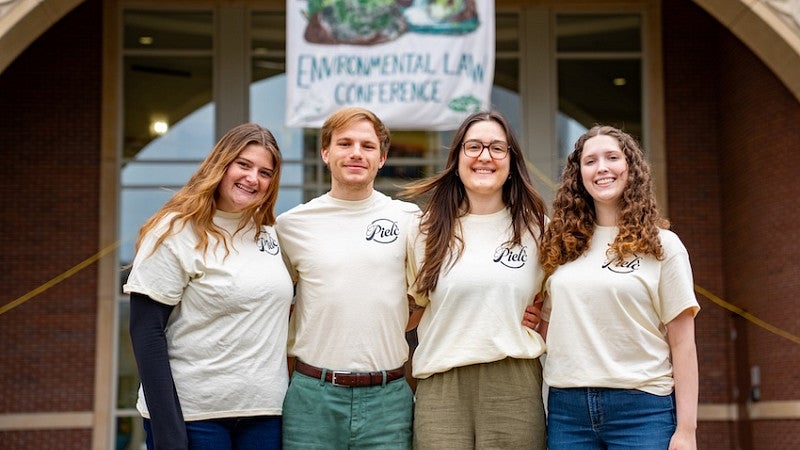
This March, student volunteers again planned Oregon Law’s Public Interest Environmental Law Conference, the largest and longest running event of its kind. This year marked the 44th year for the annual conference, which was organized around the theme “Fight Back, Voices for Good.”
Over the years, the conference has drawn thousands of activists, attorneys, scientists and advocates from around the world.
The 2026 lineup of keynote speakers included Chuck Sams, former director of the National Park Service and Scholar in Residence at the school’s Environmental and Natural Resources Law Center and John Leshy, emeritus professor at the University of California College of the Law San Francisco.
An organization at Oregon Law called Land, Air, Water, the nation’s oldest and largest student environmental law society, manages the conference each year. Meet four of our volunteers, the co-directors who (on top of being busy law students) contributed their time and passion to make it happen.
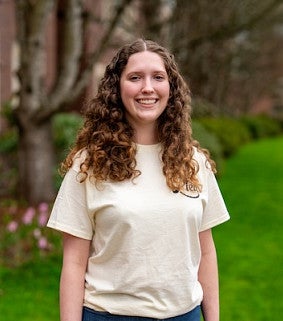
Anna Hampton
Second year law student
Hometown: Lafayette, Indiana
Undergraduate degree: Environmental science and political science at Purdue University
Environmental “aha” moment: “For a lot of people, their time outside led them to environmental law. For me, it was reading about case law and environmental tragedies. For example, in high school I read about the Love Canal toxic waste disaster in New York.”
Early start: Throughout high school, Hampton volunteered at the Columbian Park Zoo where she enjoyed teaching kids about the role of animals in ecosystems. As an undergraduate, she joined the pre-law society and aspired to study environmental law.
What brought you to Oregon? The Environmental Law Program, clinics, club opportunities and the Public Interest Environmental Law Conference.
Summer plans: Hampton was chosen for a summer, 2026 Wayne Morse, Environmental and Natural Resources Law Center fellowship with the Confederated Tribes of Siletz Indians.
What motivates you? “I enrolled in law school to protect the environment and human life.”
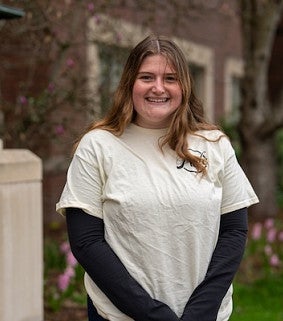
Molly Cochran
Second year law student
Hometown: Redondo Beach, California
Undergraduate degree: Mass Communication, Media Studies at University of California, Berkeley
Favorite outdoor memories: Camping, hiking, Muir Woods National Monument and Yosemite National Park
Networking opportunities: Last year, Cochran connected with the public interest law firm Our Children’s Trust at their table during the conference. Now she’s earning credits volunteering for the nonprofit focused on climate change.
What does the conference mean to you? “It’s one of the reasons I chose an environmental law path.”
Favorite thing about the conference: “Environmental law is such an uphill battle. The conference gives students opportunities to gather with other students, attorneys, academics and others. There’s so much power in numbers and it’s encouraging to see so many people come back each year.”
Aspirations after law school: “Fight for the preservation and conservation of the Earth, no matter how I’m able to do that. Whether that’s a public interest firm, nonprofit or through the state — that’s what I want to be doing.”
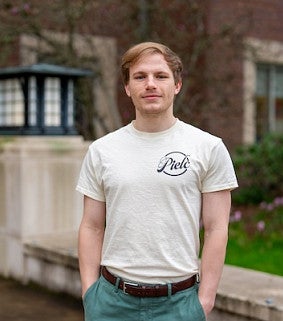
Jay Everett
Second year law student
Hometown: Boise, Idaho
Undergraduate degree: Writing, Rhetoric and Technical Communication at Boise State University
Outdoor memories: Camping and hiking in Idaho’s Sawtooth Mountain Range
How did you develop a commitment to the environment? “It evolved over time. I spent a lot of time outdoors and my parents reinforced the philosophy of ‘leave it as you saw it.’ As I got older and learned how we regulate our wilderness, it was eye-opening.”
Favorite aspect of the conference: How it connects attorneys with people from conservations groups, which helps lawyers and non-lawyers work more strategically toward their shared goals.
The power of networking: Everett will spend this summer working as an intern with Oregon Wild, an organization he learned about during a panel discussion on the Wild and Scenic Rivers Act at last year’s conference.
Aspirations after law school: Work with a nonprofit organization or government agency on conservation issues.
Alignment of values: “I’m interested, above all, in doing work that is rewarding, fulfilling and makes a positive impact on the world.”
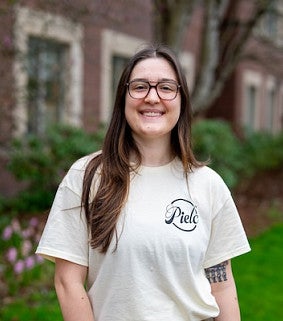
Abby Dompier
Third year law student
Hometown: Idaho Falls, Idaho
Undergraduate degree: Political science and environmental and sustainability studies at University of Utah
Outdoor memories: Skiing in the Teton Valley. “My dad taught me how to ski and it was something we enjoyed as a family.”
Value of the Environmental Law Program: It was a key reason Dompier came to Oregon Law.
Top benefit of the conference: Learning about current litigation from attorneys involved in ongoing cases, which Dompier says brings the law to life and makes it exciting.
Fringe benefits of being a co-coordinator: A great way to learn time management.
Glimpse into the future: For Dompier, meeting practicing attorneys at the conference gives students opportunities to learn what being an environmental lawyer is like, day in and day out.
What being an environmental lawyer means: “Protecting the places I love and the places other people love. We have to do our best to preserve those for future generations.”